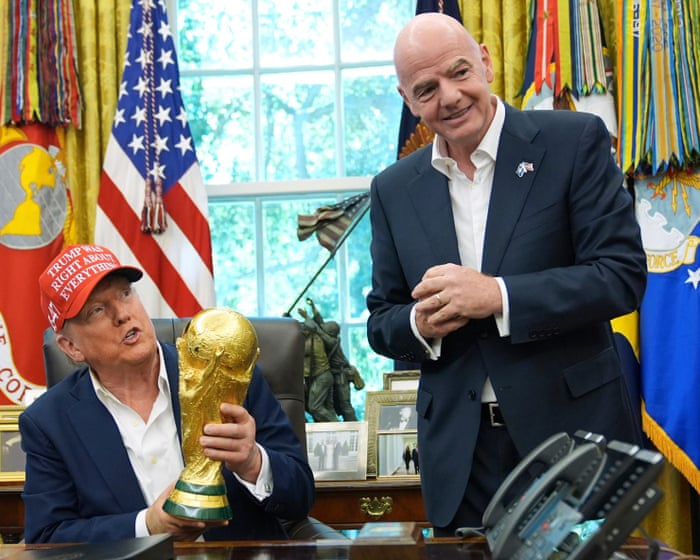
Gianni Infantino, the President of FIFA, is expected to avoid sanctions from the International Olympic Committee (IOC) despite allegations that he violated protocols regarding political neutrality. This controversy arose from Infantino’s alleged interaction with former US President Donald Trump concerning the suspension of Folarin Balogun.
The Controversy Surrounding Balogun's Ban
Folarin Balogun, a key player for the United States national team, faced a ban that would have prevented him from participating in a crucial last-16 match against Belgium. This suspension was unexpectedly lifted for 12 months following a decision by FIFA's disciplinary committee, sparking widespread debate.
Trump’s Involvement
Adding a political dimension to the saga, Donald Trump disclosed that he had directly contacted Gianni Infantino to discuss Balogun's situation. This revelation raised questions about potential breaches of FIFA's rules on political neutrality, which aim to keep political influences separate from footballing decisions.
FairSquare's Complaint
In response to these developments, FairSquare, a human rights organization, filed a formal complaint with the IOC. They argued that Infantino’s engagement with Trump constituted a breach of political neutrality, a principle upheld by both FIFA and the IOC.
- FairSquare highlighted that Infantino’s actions could set a concerning precedent if left unaddressed.
- The organization urged the IOC to consider the implications of such interactions on the integrity of international sports governance.
IOC's Expected Decision
Despite the complaint, sources indicate that the IOC is unlikely to impose any sanctions on Infantino. This decision is anticipated due to the complex nature of the case and the lack of clear precedent regarding such high-profile political interactions.
“The IOC is weighing its options carefully, but given the intricate nature of the situation, sanctions seem improbable,” stated a source close to the matter.
Implications for International Sports
This case highlights the ongoing challenges faced by international sports bodies in maintaining a clear boundary between politics and sports. The potential for political figures to influence decisions at the highest levels of international sport continues to raise concerns among stakeholders.
As discussions surrounding this incident continue, the focus remains on ensuring that sports administration adheres to its foundational principles of neutrality and fairness. Both FIFA and the IOC are under scrutiny to uphold these values in the face of increasing political interests.
Conclusion
While Gianni Infantino appears set to avoid sanctions from the IOC, the incident underscores the complex dynamics between politics and international sports governance. As the world of sports continues to navigate these challenges, the emphasis remains on safeguarding the integrity and neutrality of sporting decisions.