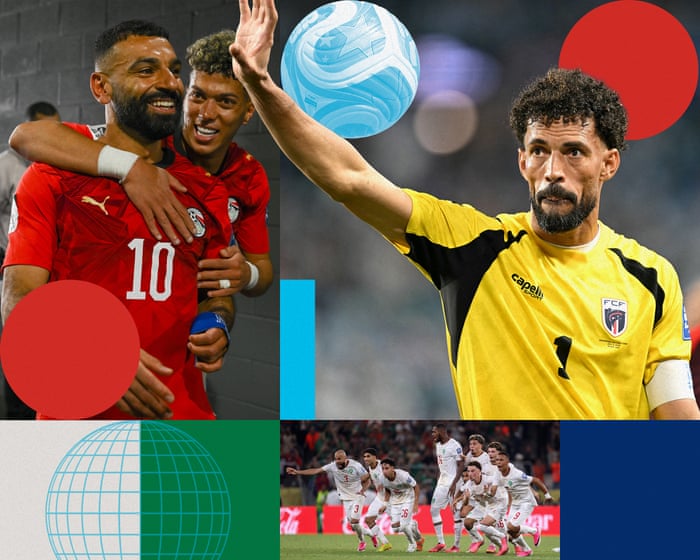
The recent FIFA World Cup has sparked varied interpretations regarding Africa’s performance. With Egypt and Morocco advancing to the last 16 through dramatic penalty shootouts, the continent's achievement is notable yet raises questions about the overall progress of African football on the global stage.
Contrasting Perspectives on Success
Much like the viral debates over optical illusions, opinions on Africa's World Cup journey vary widely. Some see it as a significant step forward, while others argue that it highlights enduring challenges within African football. The Confederation of African Football (CAF) has long campaigned for increased representation, citing that only 9% of African nations participated in the World Cup compared to 50% of South American countries.
Critics, however, often point to the historical performance of African teams, noting that while South American nations have secured the World Cup title ten times, African countries have struggled to reach the semi-finals until Morocco's breakthrough in Qatar in 2022.
Increased Representation in Future Tournaments
The expansion to a 48-team World Cup presents new opportunities for African football. CAF might secure nine automatic berths, with the potential for a tenth through intercontinental play-offs. This change could significantly increase African representation, offering a broader platform for showcasing talent across the continent.
The Democratic Republic of the Congo (DRC) capitalized on this opportunity by securing a spot through the intercontinental play-offs, highlighting the potential for lesser-known teams to make an impact on the world stage.
Balancing Quantity and Quality
While the increase in slots is a positive development, it raises the question of balancing representation with maintaining competitive quality. The challenge lies in ensuring that the additional teams are not just filling numbers but are capable of competing at the highest level.
This balance is crucial for Africa to not only participate but also make a significant impact in future tournaments. The ambition is to progress from merely advancing past the group stages to consistently challenging for the title.
Future Prospects and Development
For Africa to capitalize on the increased representation, investment in grassroots development and infrastructure is essential. Enhancing training facilities, developing local leagues, and nurturing young talent are pivotal in elevating the standard of African football internationally.
Moreover, learning from successful models in other continents could provide valuable insights. The focus should be on building a sustainable football ecosystem that supports both player development and competitive success.
In conclusion, while Africa's recent World Cup journey has seen moments of triumph, it also highlights areas for growth and improvement. The expanded tournament format offers a promising avenue for increased participation, but the ultimate goal should be to transform this opportunity into tangible success on the global stage.