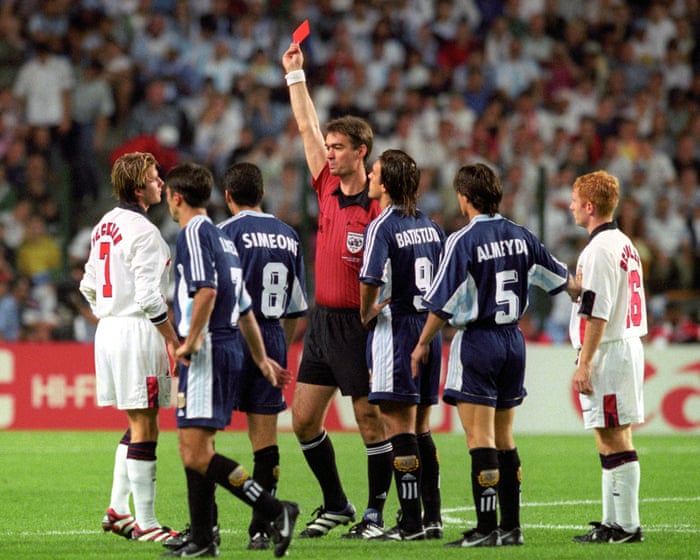
The football rivalry between England and Argentina is one of the most storied in international football, with its roots stretching beyond the pitch to political and historical tensions. This competitive relationship is often highlighted by two particularly memorable World Cup matches: the 1998 showdown in France and the 2002 encounter in Japan.
1998: A Clash in Saint-Étienne
The 1998 World Cup match in Saint-Étienne, France, remains etched in the memories of football fans worldwide. It was a game that encapsulated the passion and tension of the England-Argentina rivalry. England's young star, Michael Owen, burst onto the global stage with a spectacular solo goal that showcased his incredible pace and skill, giving England a 2-1 lead. However, the match is perhaps best remembered for its dramatic twists and turns.
Argentinian captain Diego Simeone played a pivotal role in one of the match's most contentious moments. A challenge by England's David Beckham resulted in what many deemed a theatrical fall by Simeone, leading to Beckham receiving a red card. This incident turned the tide of the game, leaving England to play with ten men. The match eventually went to penalties after ending 2-2 in regular and extra time, with Argentina emerging victorious.
2002: Redemption in Sapporo
Four years later, the two teams faced off again, this time in the group stage of the 2002 World Cup held in Japan. The stakes were high, as both teams were eager to assert their dominance and progress in the tournament. Glenn Hoddle, who had been England's manager in 1998, watched as his team sought redemption.
The match in Sapporo was another tense affair, but this time it was England who came out on top. David Beckham, eager to atone for his earlier red card against the same opponents, scored the only goal of the match from the penalty spot. His composed finish sent England fans into raptures and secured a 1-0 victory over Argentina, providing a measure of revenge for the heartbreak of 1998.
The Wider Rivalry
Beyond these two iconic matches, the England-Argentina rivalry is steeped in history. It is often described as the only trans-continental derby, with political undertones dating back to the British invasions of the early 19th century. The infamous 'Hand of God' goal by Diego Maradona in the 1986 World Cup quarter-final further fueled the rivalry, embedding it deeply into football folklore.
For Argentinian players and fans, matches against England are more than just games; they are opportunities to assert national pride and relive historical narratives. English players and supporters, meanwhile, see these encounters as a chance to challenge a formidable footballing nation and exorcise past demons.
As these teams continue to meet on the international stage, the intensity of their rivalry endures, offering fans around the world a spectacle rich in drama and emotion. Each encounter is a chapter in a long-standing saga that transcends sport, reminding us of football's unique ability to mirror broader cultural and historical themes.