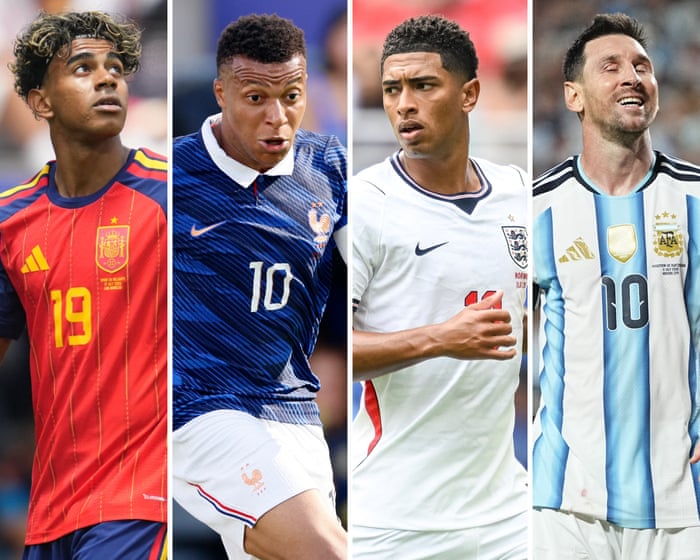
In the intense world of international football, the FIFA rankings serve as a crucial measure of a team's performance. These rankings, updated after every match, provide an ongoing commentary on the global football hierarchy. The recent World Cup has sparked interest as the semi-finalists are identical to the top four in the FIFA rankings at the start of the tournament. This raises the question: how often does this alignment occur?
Historical Context of FIFA Rankings and Semi-Finalists
FIFA rankings are designed to reflect a team's strength and are updated throughout a tournament, including the World Cup. Typically, these rankings can fluctuate significantly as teams either perform above or below expectations. However, the 2023 World Cup semi-finals presented a unique scenario where the top four teams in the rankings at the start of the competition reached the semi-final stage.
Previous Instances of Top Four Teams Reaching the Semi-Finals
Historically, it is uncommon for the top four ranked teams to all reach the semi-finals. For example, looking back at past World Cups, several instances illustrate the unpredictable nature of the tournament:
- In 2002, the semi-final matchups included Brazil, Germany, South Korea, and Turkey. Of these, only Brazil and Germany were among the top-ranked teams, highlighting the surprising run of South Korea and Turkey.
- The 2006 World Cup saw Germany, Italy, Portugal, and France in the semi-finals. Again, while these teams were strong, not all were in the top four of the FIFA rankings prior to the tournament.
- In 2010, Spain, the Netherlands, Germany, and Uruguay reached the semi-finals. Spain and the Netherlands were high in the rankings, but Germany and Uruguay's paths were less predictable based on initial standings.
These examples underscore the rarity and excitement when the highest-ranked teams confirm their dominance by reaching the latter stages of the tournament.
The 2023 World Cup: A Testament to Ranking Accuracy?
The alignment of the semi-finalists with the top four ranked teams in 2023 might suggest an increasing accuracy in FIFA's ranking system or simply a coincidence where top teams performed as expected. This occurrence invites analysis on whether it reflects improved consistency among elite teams or other factors such as favorable draws and absence of major upsets.
“The top four teams in the FIFA rankings are also the four semi-finalists at the World Cup,” noted a keen observer, highlighting the rarity of this alignment in the tournament's history.
While this may enhance the credibility of rankings, it also poses questions about the competitive balance in world football. Are the top teams distancing themselves from the rest, or is this a temporary alignment?
Conclusion: A Unique Moment in Football History
The 2023 World Cup semi-finals have provided a rare spectacle where the top-ranked teams have justified their standings by reaching the penultimate stage of the competition. This alignment serves as a fascinating case study for football analysts and fans alike, offering insights into the dynamics of international football competition and the predictive power of FIFA rankings.
As we move forward, it will be intriguing to see if this pattern continues in future tournaments or if the unpredictable nature of the World Cup reasserts itself, reminding us of the tournament’s perennial capacity for surprise and drama.