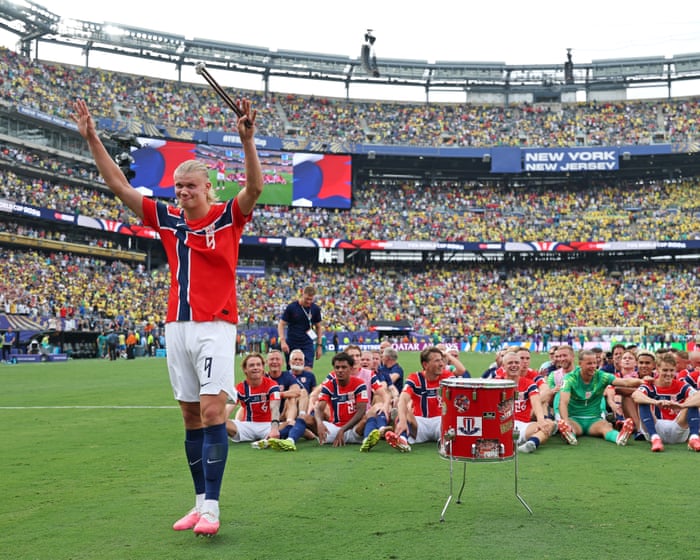
In a remarkable turn of events, Norway's national football team secured an unexpected victory over Brazil in the World Cup, reaching the quarter-finals for the first time in 28 years. This achievement is not only a testament to the players' skills but also reflects the unique sporting culture that has been cultivated in Norway. With a population of just 5.5 million, the nation has developed a distinctive model that prioritizes enjoyment and variety in youth sports, rather than an early focus on competition and specialization.
The Match That Made History
During the match, the Norwegian team, led by the formidable Erling Haaland, squared off against the Brazilian squad, known for its flair with players like Vinícius Júnior. Despite the pressure of facing a five-time champion team, Norway played with a confidence and style that belied their years away from the World Cup stage.
A Different Path to Success
Norway's approach to developing athletes starkly contrasts with that of many other countries. While nations like Brazil often emphasize identifying and nurturing talent from a young age through intensive academies focused on a single sport, Norway offers a broader, more inclusive system. This system is designed to make sports an enjoyable experience for children, allowing them to participate in multiple activities without the pressure of league tables or trophies.
Erling Haaland, Martin Ødegaard, and Antonio Nusa are prime examples of athletes who have thrived under this model. They grew up in an environment where the focus was on participation and enjoyment, which some argue has contributed to their well-rounded development and success on the international stage.
The Philosophy Behind Norway's Youth Sports
Norway's youth sports system is built on the principle that sports should be fun and inclusive. The emphasis is placed on giving children the freedom to choose their sports and the time to develop at their own pace. This philosophy helps to foster a lifelong love for sports and physical activity, which is seen as more beneficial than early specialization.
- Choice and Variety: Children are encouraged to try multiple sports, allowing them to develop diverse skills and interests.
- Focus on Enjoyment: By removing the pressure of competition, children can focus on having fun and improving their skills naturally.
- Long-term Development: This approach aims to produce well-rounded athletes who can excel in their chosen sports as they mature.
These principles are deeply ingrained in Norwegian sports culture, influencing how clubs and organizations operate. The goal is not just to produce elite athletes but to ensure that sports remain an integral and enjoyable part of life for all children.
Impact on International Performance
The recent success of Norway's football team, particularly their victory over a formidable Brazilian side, highlights the effectiveness of this approach. The team's performance has drawn attention to Norway's methods, sparking interest in how a small nation could compete at such a high level on the world stage.
While Norway's model may not be suitable for every country, it offers valuable insights into how sports can be approached differently. By prioritizing fun and inclusion, Norway has not only developed world-class athletes like Erling Haaland but also maintained a strong cultural emphasis on sportsmanship and participation.
Conclusion
The story of Norway's victory over Brazil is about more than just a football match; it's about a broader philosophy that challenges conventional approaches to youth sports. As the world watches Norway's continued success, the question arises: could this model be adapted elsewhere to achieve similar results?