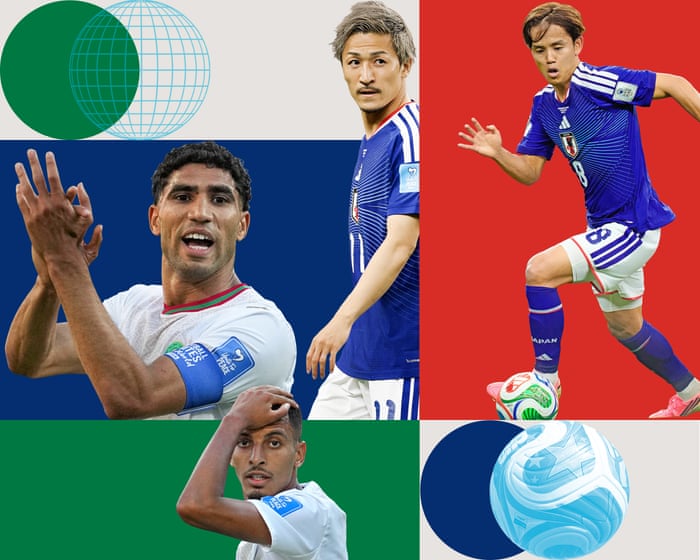
The FIFA World Cup, a tournament steeped in tradition and global appeal, continues to evolve, introducing new formats and expanding its reach. Despite these changes, the pattern of victories remains dominated by a select few from Western Europe and South America. As the tournament progresses into the knockout stages, two intriguing matchups offer a glimpse of potential upheaval in this established order.
Japan's Bold Ambitions
Japan has consistently shown growth in international football, and their current squad is no exception to this trend. Facing off against Brazil, a nation with a rich World Cup legacy, Japan will look to leverage their disciplined playstyle and tactical acumen. With a focus on youth development and tactical innovation, they aim to disrupt Brazil's quest for another title.
Morocco's Rise
Similarly, Morocco enters the fray against the Netherlands, bringing with them a blend of skill and determination. Morocco has been quietly building a strong team, and their recent performances have caught the attention of football enthusiasts worldwide. Their encounter with the Dutch will serve as a litmus test of their progress on the world stage.
Breaking the Pattern of Past Victors
Since Argentina's triumph in 1978, the World Cup has seen only two new champions: France and Spain. Both nations capitalized on their European roots, utilizing their significant resources to develop robust youth academies. This industrialized approach to nurturing talent has set a benchmark for success, with other countries striving to emulate their models.
The European and South American Dominance
The dominance of traditional powerhouses such as Brazil, Germany, and Italy, coupled with the strategic prowess of France and Spain, has made it challenging for other nations to break through. These countries have not only excelled on the field but have also pioneered footballing strategies and infrastructure that have kept them at the forefront of the sport.
A New Era in Global Football?
As Japan and Morocco prepare to take on their formidable opponents, the possibility of a shift in the World Cup hierarchy is tantalizing. While the odds may favor the established giants, the unpredictability of knockout football means that surprises are always possible. A win for either Japan or Morocco would not only be historic but could also signal a new era in global football, inspiring other nations to challenge the status quo.
In a tournament where tradition often meets innovation, the upcoming matches are more than just battles on the pitch. They represent the hopes of nations eager to carve out their place in football history, challenging the old guard and striving for glory on the world’s biggest stage.