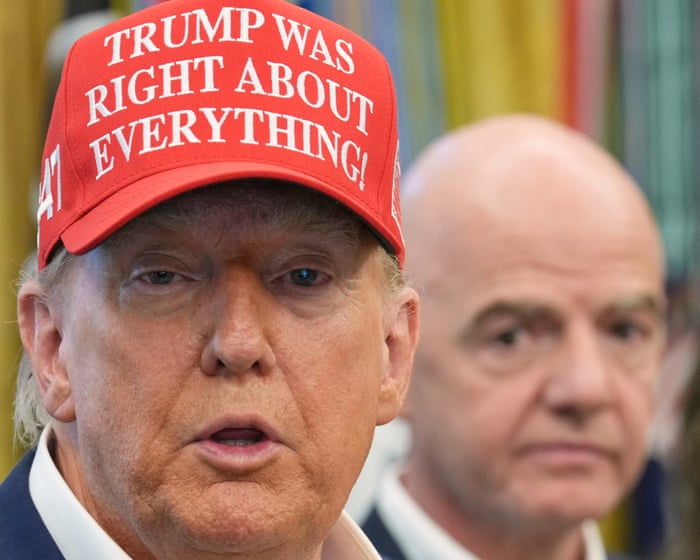
The announcement that the United States will co-host the 2026 World Cup was met with enthusiasm by football fans across the globe. However, the journey to this decision has not been without controversy. Central to this is FIFA President Gianni Infantino's attempts to establish a favorable relationship with former US President Donald Trump. This alliance, intended to garner support and preferential treatment for FIFA, has instead draped a shadow over the sport's credibility.
Infantino's Political Maneuvering
Since the United States secured the bid to host the 2026 World Cup alongside Canada and Mexico, Infantino has been notably eager to align himself with Trump. The strategy appeared to be a classic case of political maneuvering, aimed at ensuring that FIFA would benefit from the goodwill of the American government. However, as many have observed, such endeavors often come with significant risks.
The Consequences of Political Alliances
Infantino’s dealings with Trump echo the cautionary tale of a 'Faustian bargain,' where short-term gains are outweighed by long-term costs. Critics argue that by attempting to curry favor with Trump, Infantino inadvertently involved the sport in political controversies, undermining its universal appeal. The complexities of this relationship have raised concerns about the integrity of FIFA and the World Cup itself.
Trump's presidency was marked by stringent anti-immigrant and nationalist policies, which contrasted sharply with football's image as a sport that embraces inclusivity and diversity. Despite the political climate, the reception of international teams and fans in the US has largely been positive, showcasing the welcoming nature of the American public, even amidst political tensions.
The Global Impact of Football
Football's universal reach gives it the potential to serve as a unifying force. FIFA often highlights this aspect, promoting the sport as a means to “bring the world together.” This vision is challenged when political entanglements threaten to overshadow the game’s unifying potential.
While Infantino's motivations might have been aimed at securing logistical and governmental support for the World Cup, the fallout suggests a need for FIFA to reassess how it navigates political landscapes. The sport's credibility hinges on its ability to remain impartial and true to its values of inclusivity and unity.
Looking Ahead to 2026
As the 2026 World Cup approaches, it is crucial for FIFA to focus on preserving the sport's integrity. This means ensuring that football remains above political influences and continues to serve as a beacon of unity. The enthusiasm surrounding the tournament's return to North America is palpable, and there is hope that it will serve as a celebration of the sport's global appeal.
Ultimately, the challenge lies in balancing the logistical demands of organizing such a colossal event with the need to uphold the values that make football beloved worldwide. Infantino’s experiences with Trump underline the importance of cautious diplomacy in maintaining the sport’s reputation.
The 2026 World Cup offers an opportunity to reaffirm football’s commitment to connecting people across cultures and borders, staying true to its role as a global unifier, free from the pitfalls of political entanglement.